In the last decade, server architecture has evolved faster than most organizations’ validation processes.
What used to be a “simple CPU + RAM + motherboard” decision has exploded into a complex matrix involving:
CPU stepping & microcode alignment
DDR5 memory PMIC behavior under load
PCIe 4.0/5.0 signal integrity
SR-IOV and DPDK NIC firmware interactions
RAID controller BIOS baselines
UEFI/ACPI variations among vendors
Every new generation adds not only new features—but new ways things can silently break.
Today, compatibility risk isn’t linear.
It’s exponential.
1. CPU Stepping: Same Model, Different Behavior
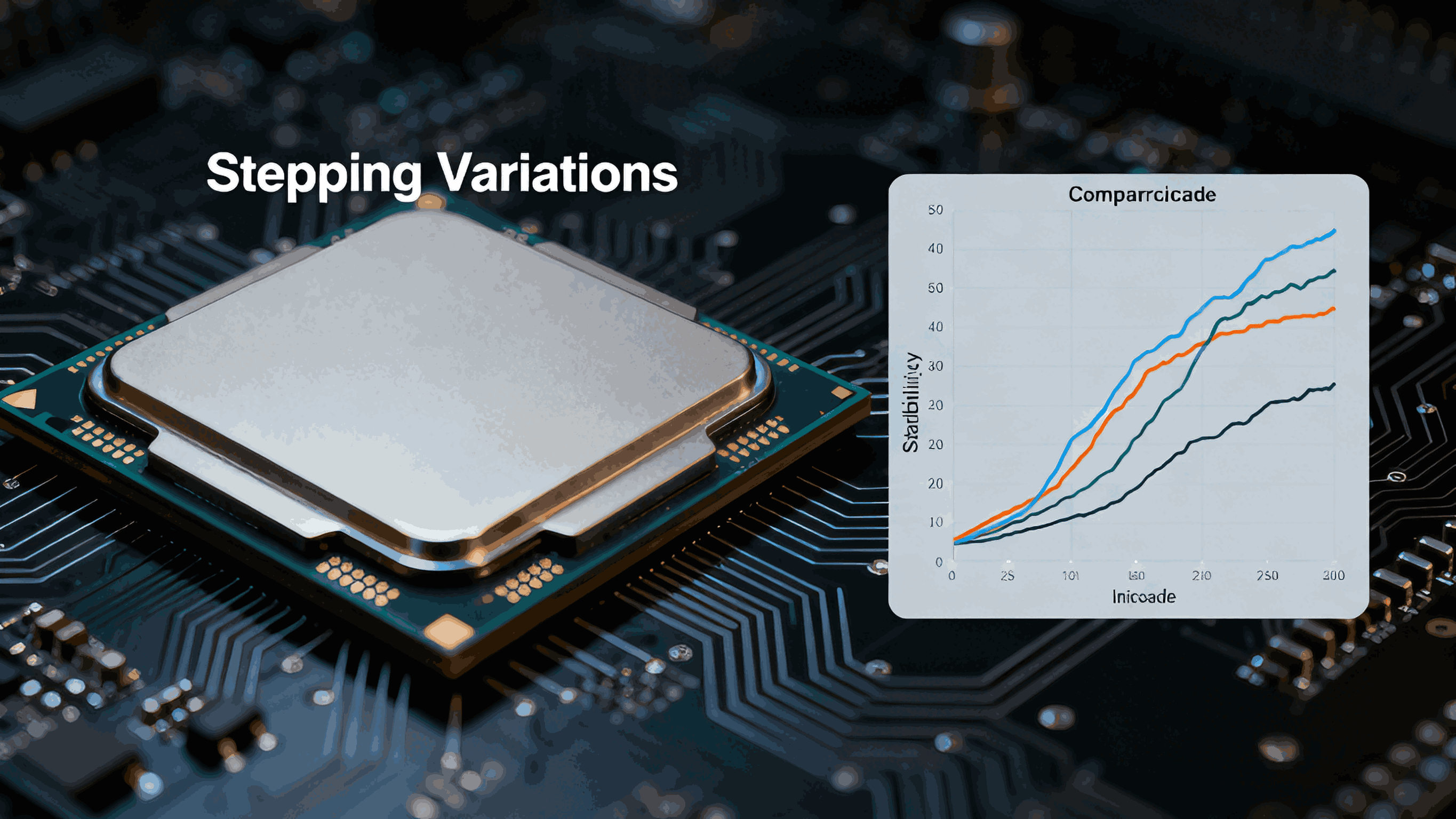
Modern CPUs update frequently through stepping changes, microcode patches, and power management tweaks.
For server builders, this means:
Two identical CPU models may behave differently under AVX workloads
BIOS must match the exact microcode patch
Power limits (PL1/PL2) vary subtly by stepping, affecting stability
What used to be a single variable is now a moving target.
2. DDR5 PMIC & Memory Vendor Variance
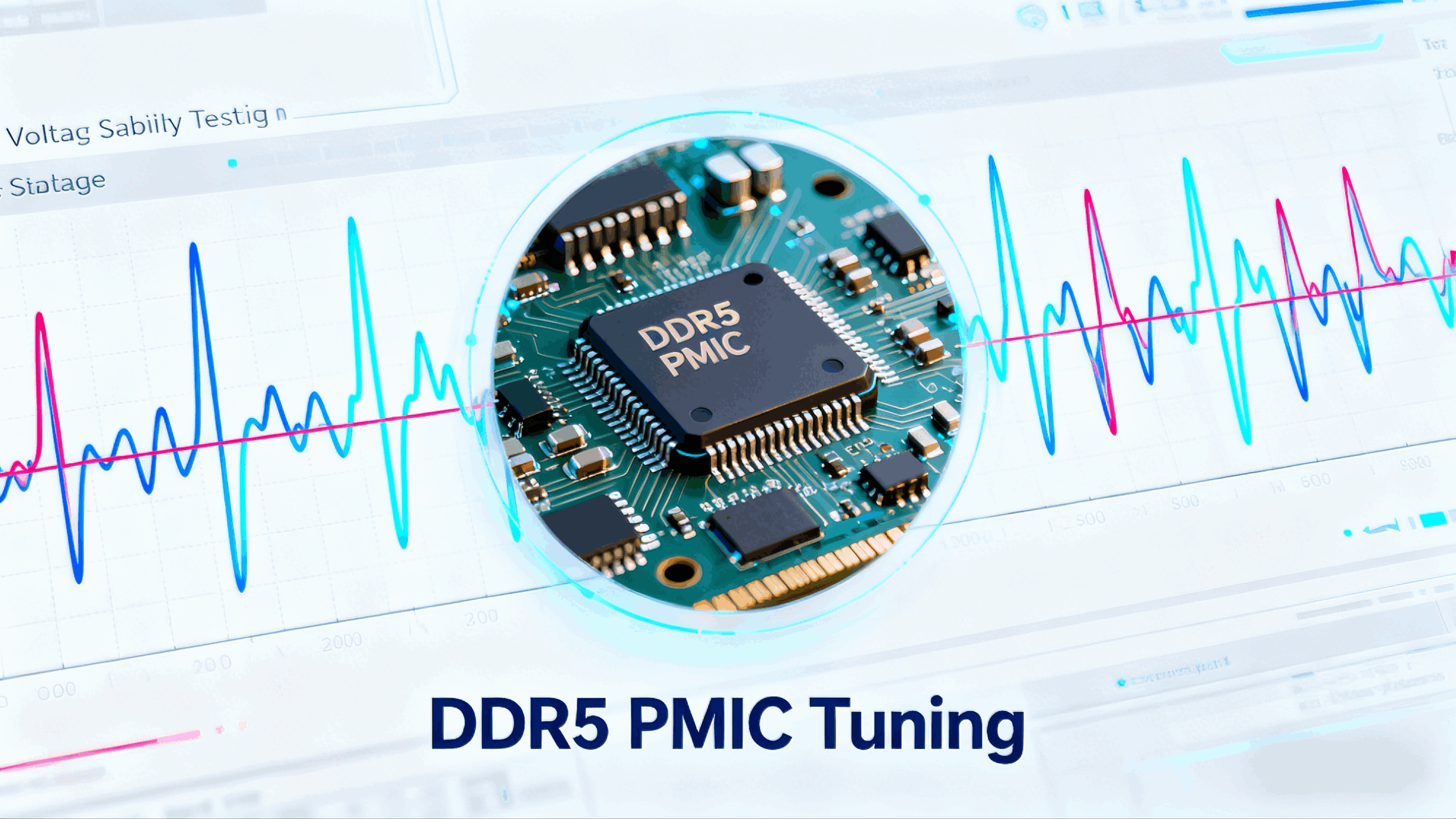
DDR5 introduced a PMIC (Power Management IC) directly on the DIMM.
This dramatically increased risk:
PMIC firmware varies by vendor
Voltage stability differs under sustained memory bandwidth
Timing subtleties cause intermittent boot loops
Compatibility depends on motherboard power rail precision
A DDR5 module that passes in Lab A may fail in Production B simply due to PMIC tuning.
3. NIC SR-IOV, Firmware, and the Invisible Edge Cases
10G/25G/40G NICs now involve:
SR-IOV virtualization layers
DPDK compatibility
Rapid firmware revisions
Offload engine updates (RSS, TOE, checksum, crypto)
The result?
One NIC firmware mismatch can cause:
Packet drops only under 100% parallel threads
SR-IOV VF instability
Kernel panic on a specific Linux distribution
These issues never show up in spec sheets—only in production.

4. The Complexity Multiplier
Each subsystem (CPU, RAM, NIC, SSD, BIOS, OS kernel) interacts with others.
The result is a compatibility matrix that grows exponentially:
3 CPU steppings
8 DDR5 vendors
5 NIC firmware baselines
4 OSes × multiple kernels
10 PCIe devices
3 × 8 × 5 × 4 × 10 = 4,800 potential interaction combinations.
No IT team can manually test this.
Most hardware vendors don’t test this.
But failure in one corner case means:
servers hang after 72 hours uptime
virtualization fails under SR-IOV
performance drops 30% due to PMIC tuning
random PCIe training failures at POST
This is why engineers feel compatibility is “getting worse.”
It’s not an illusion—it’s math.
How Angxun Reduces These Compatibility Risks to Near Zero
Since 2003, Shenzhen Angxun Technology has solved exactly this problem for global OEM/ODM customers.
With:
10,000 m² factory
500+ skilled staff
5 advanced SMT production lines
High-precision SPI, AOI, ICT test systems
300,000+ motherboard monthly production capacity
We don’t just manufacture motherboards.
We remove risk.
Angxun Motherboard Engineering Advantages
✔ 1. Optimized cooling system with high-grade aluminum thermal base
Ensures DDR5, VRM, and PMIC all remain within safe thermal envelopes to maximize compatibility.
✔ 2. All-solid capacitors
Ensures stable power delivery during high-load memory and PCIe bursts.
✔ 3. PCB copper-plating technology
Improves signal integrity for PCIe 4.0/5.0 and reduces cross-talk issues.
✔ 4. Independent CPU power supply architecture
Prevents stepping-related microcode instability under changing load conditions.
✔ 5. Zero-burn protection circuit
Reduces risk of damage during component mismatch, testing, or customer integration.
✔ 6. Dual safety voltage/current stabilization design
Helps ensure compatibility even when DDR5 modules or NICs exhibit variable power requirements.
Angxun Company Advantages
23 Years OEM/ODM experience
Eco-friendly materials
CE / ROHS / FCC / ISO certified
50+ R&D engineers
Fast global delivery
Guaranteed after-sales support
We help customers ship stable systems without spending 200+ hours on validation.
Final Thought
Server hardware is only getting more complex.
But compatibility issues don’t need to scale with it.
If your team is tired of chasing intermittent failures, BIOS mismatches, and DDR5 unpredictability—
Angxun’s pre-validated designs and manufacturing ecosystem are built exactly for this new era of complexity.
Contact: Tom
Phone: +86 18933248858
E-mail: tom@angxunmb.com
Whatsapp:+86 18933248858
Add: Floor 301 401 501, Building 3, Huaguan Industrial Park,No. 63, Zhangqi Road, Guixiang Community, Guanlan Street,Shenzhen,Guangdong,China
We chat