When random crashes, performance anomalies, and ghost-in-the-machine failures become daily occurrences, you discover hardware integration's most insidious enemy: hidden compatibility issues.
As a motherboard ODM/OEM manufacturer, we've seen every type of hardware failure imaginable. But the most frustrating problems by far are those intermittent, illogical compatibility issues that defy reproduction. This real-world case consumed nearly a month of our engineering team's time but taught us invaluable lessons about hardware integration.
The Setup: Perfect Components, Failing Systems
Last October, we delivered a batch of AMD Ryzen Embedded V3000 series motherboards to a European industrial automation client. Every component passed rigorous testing:
Certified DDR5 memory (Samsung chips)
Recommended PSUs (800W 80Plus Gold)
Verified M.2 SSDs
Latest BIOS versions
Individual component testing passed flawlessly, but system integration revealed:
Random system freezes without BSOD errors
PCIe devices occasionally disappearing then reappearing
Memory tests passing while real applications crashed frequently
The Investigation: From Confidence to Despair
Week 1: Standard Troubleshooting
We began with established protocols:
Updated to latest BIOS versions
Tested different memory configurations
Swapped various power supplies
Tried different PCIe devices
Result: The problem persisted unpredictably. Systems might run stable for 48 hours or crash within 30 minutes.
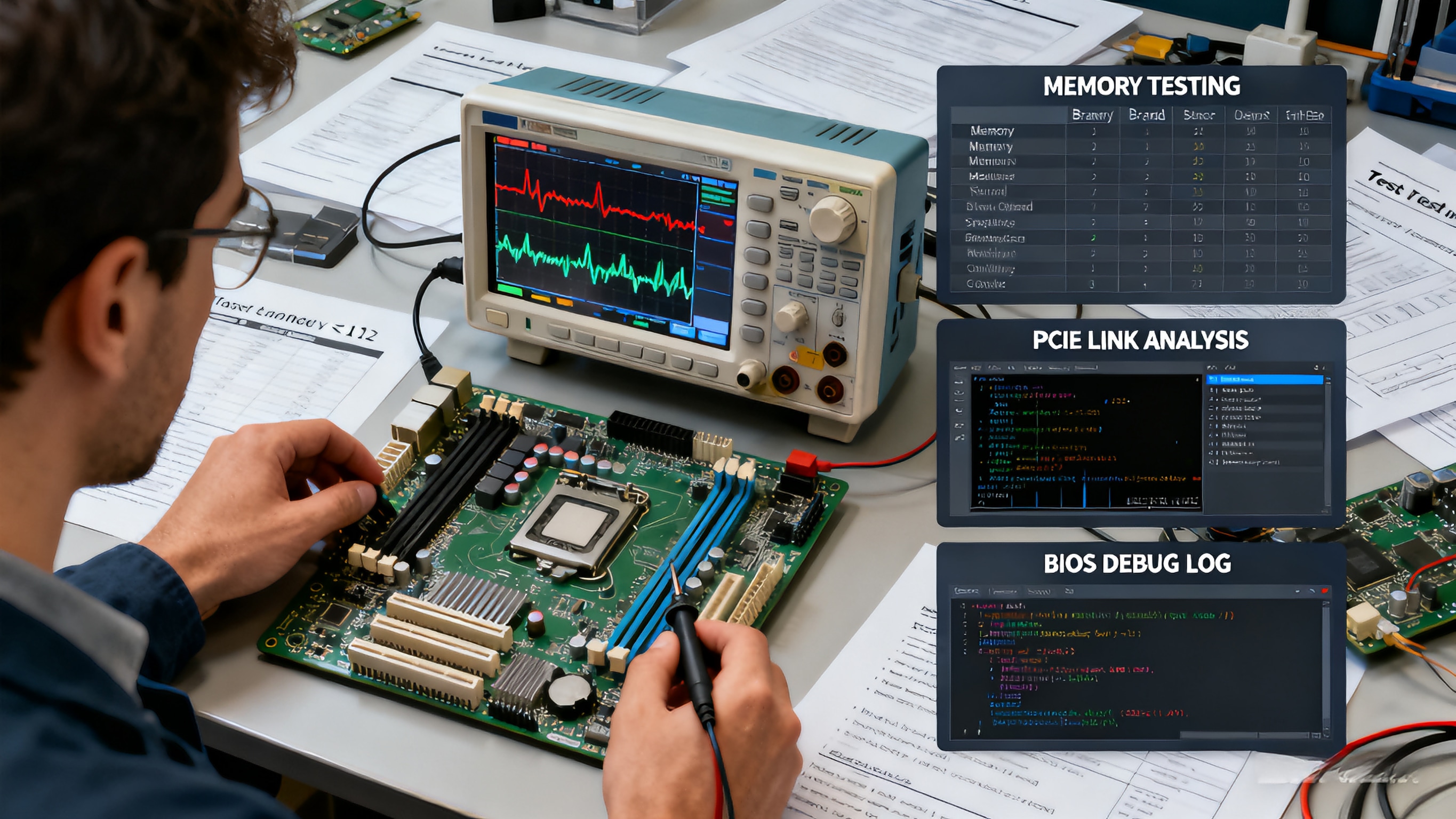
Week 2: Deeper Hardware Analysis
We escalated to advanced hardware diagnostics:
Monitored power delivery with oscilloscopes
Checked PCB impedance and signal integrity
Used thermal imaging to identify overheating components
Cross-tested motherboards from different production batches
Finding: All hardware parameters measured within specifications, but problematic boards showed abnormal voltage fluctuations during specific PCIe link training sequences.
Week 3: Divided Teams, Competing Theories
Our engineering team fractured into different camps:
Signal integrity team suspected PCIe clock jitter issues
Power delivery team blamed insufficient VRM transient response
Firmware team insisted it was AGESA code defects
We even started considering supernatural explanations—when you're desperate, every possibility seems plausible.
Week 4: The Breakthrough
The turning point came when we'd nearly given up. An engineer testing different memory brands noticed:
Brand A memory: System stable
Brand B memory (client-specified): Issues reproduced
Yet both passed all memory testing tools
The real culprit wasn't the memory itself, but a PCIe link state machine conflict during memory training.
Root Cause: The Delicate Dance Between AMD Infinity Fabric and PCIe
The perfect storm required these specific conditions:
Particular memory models (even when fully JEDEC-compliant)
PCIe 4.0 x4 M.2 SSD in specific slot
Concurrent PCIe x16 graphics card operation
Motherboard power states set to "balanced" mode
Root cause: During specific power state transitions, Infinity Fabric frequency adjustments conflicted with PCIe link training timing, causing some PCIe devices to stop responding.
This wasn't a single component failure, but the perfect storm of multiple edge cases.
Solutions: From Firmware Patches to Testing Improvements
Immediate Fix:
We released a BIOS update featuring:
Adjusted Infinity Fabric power state transition timing
Increased PCIe link training timeout thresholds
Optimized memory training parameters
Long-term Improvements:
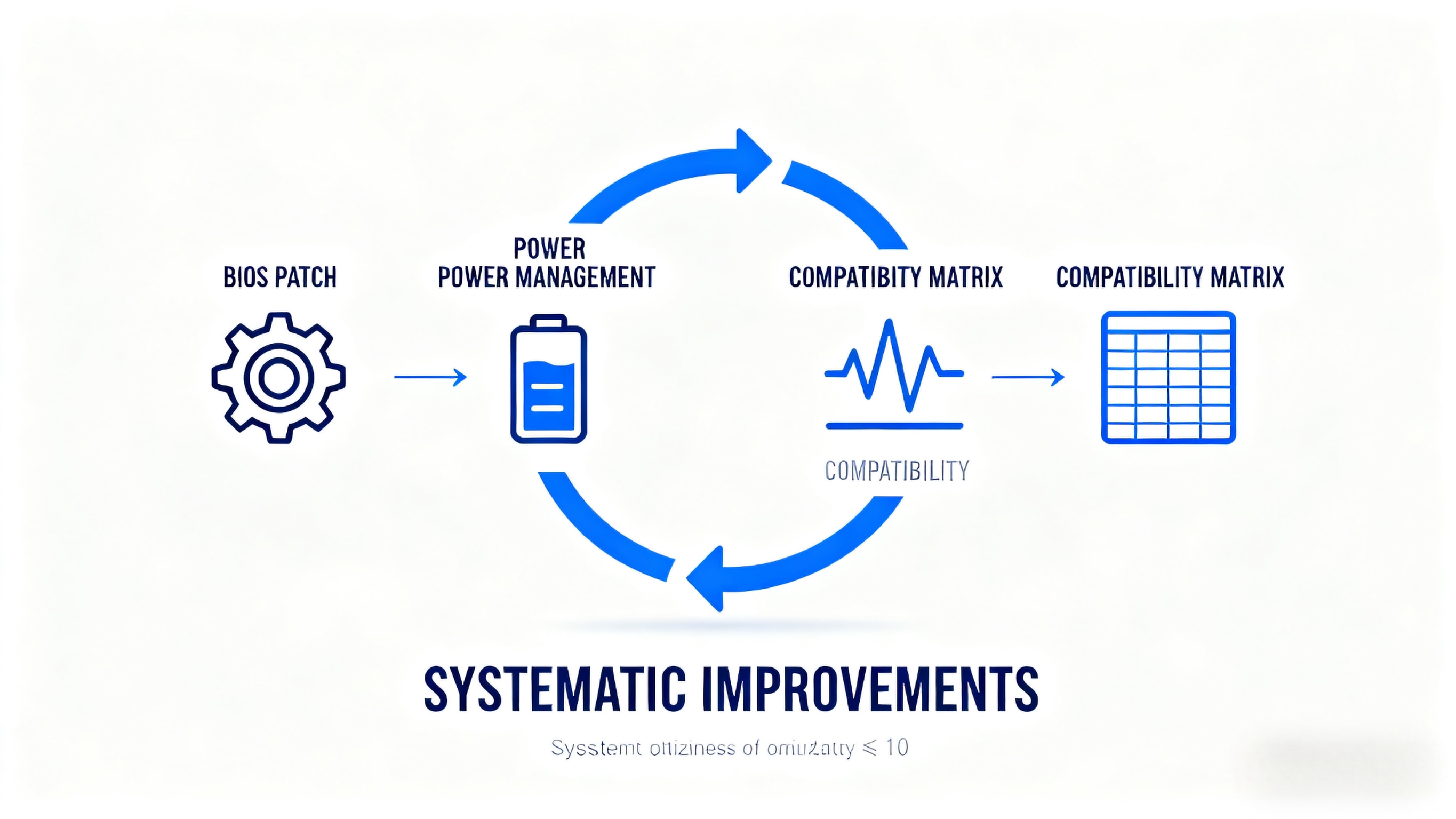
Enhanced Compatibility Testing Matrix
Testing beyond just "certified" components
Proactively testing different brand and batch combinations
Simulating real workloads beyond synthetic benchmarks
Power Management Stress Testing
Dedicated testing for power state transitions
Simulating power transients across different component combinations
Improved Customer Communication
Providing detailed known compatibility lists
Establishing rapid response protocols for weird issues
Practical Advice for Hardware Integrators
Based on this (and other painful) experiences, we recommend:
During Procurement:
Don't just check specifications: Two fully compliant components might still be incompatible
Demand comprehensive compatibility reports: Not just component lists, but combination test results
Choose suppliers with technical support capabilities: Engineering-level support matters when things go wrong
During Troubleshooting:
Systematic variable control: Change only one variable at a time, document every configuration
Watch for time-dependent patterns: Many compatibility issues relate to runtime or temperature accumulation
Test real workloads: Synthetic benchmarks might not expose problems
Don't ignore "minor" changes: Even small BIOS setting adjustments can trigger issues
For Prevention:
Build your compatibility database: Verify components in your actual application, even if suppliers say they're compatible
Keep debug hardware versions: Maintain hardware with extra test points for diagnostics
Establish technical channels with suppliers: Ensure issues reach engineering teams directly
How We Prevent Repeat Issues
This experience fundamentally changed our testing philosophy:
New testing protocols now include:
Cross-combination testing: Full matrix testing across brands, batches, and component types
Edge case simulation: Specifically testing component combinations at specification boundaries
Extended stability testing: Weeks of continuous operation rather than just 48 hours
Real-scenario simulation: Using actual customer applications instead of just testing tools
The Reality: There's No Silver Bullet for Compatibility
This painful experience taught us that in complex computing systems, compatibility issues are inevitable. What separates excellent suppliers from mediocre ones isn't the ability to avoid problems entirely, but rather:
How quickly they can identify and diagnose issues
Whether they have systematic, scientific troubleshooting methods
Their ability to learn from each incident and improve processes
Their commitment to transparency and accountability with customers
As a professional AMD motherboard ODM/OEM manufacturer, we've faced every type of compatibility challenge and built industry-leading testing and diagnostic systems. Whether you need desktop boards, industrial motherboards, server platforms, or embedded solutions, we have the experience to solve your toughest compatibility problems. Contact us to discuss your customization needs.
Contact: Tom
Phone: +86 18933248858
E-mail: tom@angxunmb.com
Whatsapp:+86 18933248858
Add: Floor 301 401 501, Building 3, Huaguan Industrial Park,No. 63, Zhangqi Road, Guixiang Community, Guanlan Street,Shenzhen,Guangdong,China
We chat