PCIe Gen4 doubled bandwidth and enabled denser, more flexible server designs.
It also removed much of the signal margin that engineers once took for granted.
In real deployments, many PCIe Gen4 stability issues are not caused by CPUs, chipsets, or endpoints —
they originate from riser cards and high-speed cables that quietly consume signal integrity margin.
For hardware engineers, these interconnects have become one of the most underestimated sources of system instability.
1. Why PCIe Gen4 Leaves No Room for Guesswork
At 16 GT/s, PCIe Gen4 operates at frequencies where:
Insertion loss rises sharply
Crosstalk becomes dominant
Impedance discontinuities cause measurable eye closure
Timing margins shrink dramatically
Components that passed PCIe Gen3 validation can become marginal — or fail outright — at Gen4 speeds.
In this environment:
Interconnect quality is no longer optional — it is foundational.
2. How Riser Cards and Cables Become Hidden Failure Points
Risers and cables introduce multiple risk vectors:
Additional connectors and vias
Longer trace lengths
Variability in dielectric materials
Assembly and tolerance variation
These factors accumulate loss and jitter, often pushing links beyond the receiver’s equalization capability.
The result is not immediate failure —
but intermittent, load-dependent instability.
3. The Typical Symptoms Engineers See in the Field
Signal-integrity-driven failures rarely look like SI problems.
Instead, they appear as:
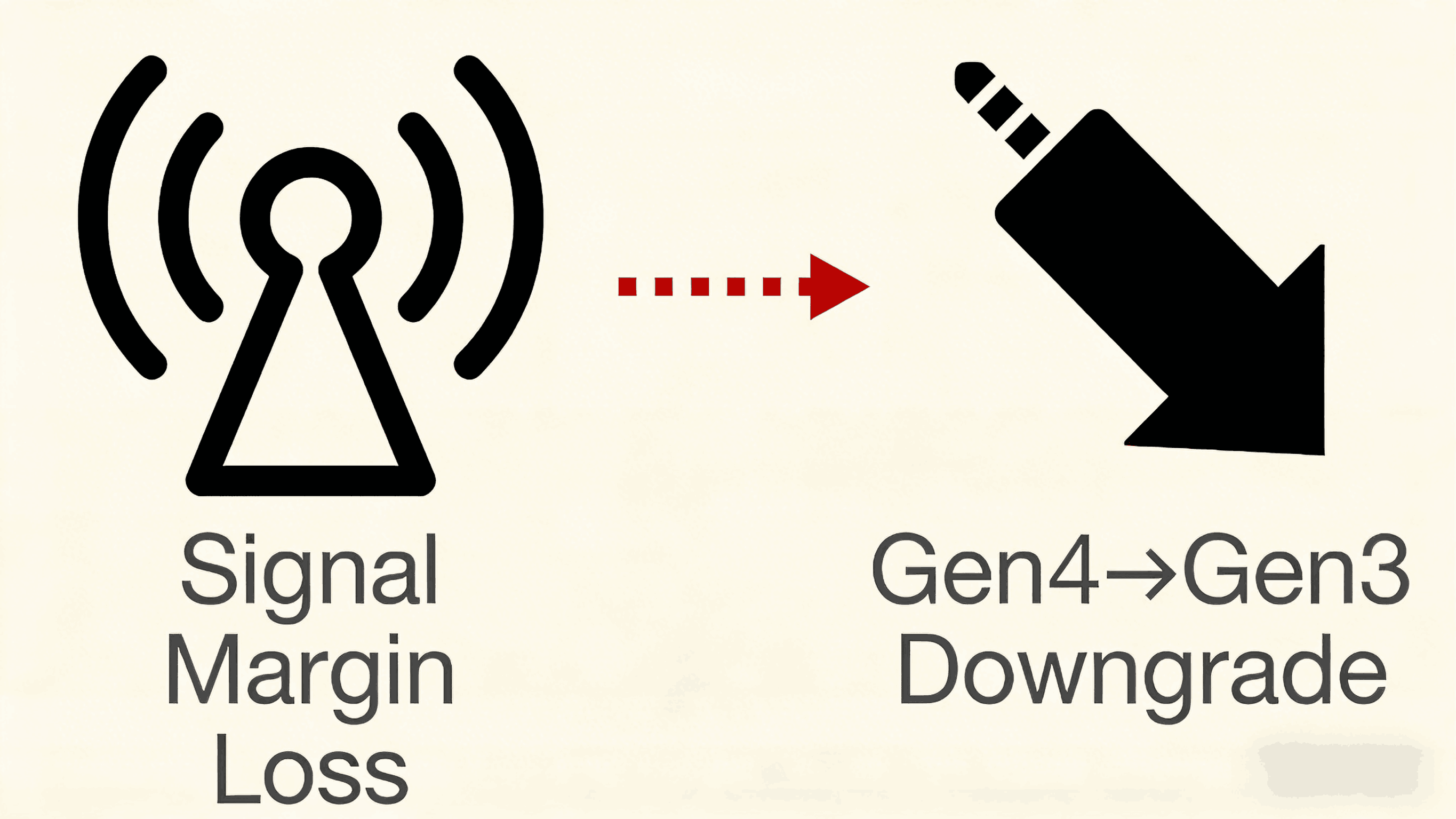
PCIe links training down from Gen4 to Gen3
Devices disappearing after warm reboots
NVMe drives intermittently dropping offline
AER error storms under I/O load
Instability only at full chassis population
These symptoms frequently lead teams to debug firmware or drivers —
while the real issue sits in the interconnect path.
4. Why “Gen4-Capable” Labels Are Misleading
Many risers and cables are marketed as “PCIe Gen4 ready.”
In practice, this often means:
The design works in a reference setup
Validation was limited to short links
Testing did not include worst-case temperature or vibration
No margin analysis was performed
“Capable” does not mean stable across real systems and environments.
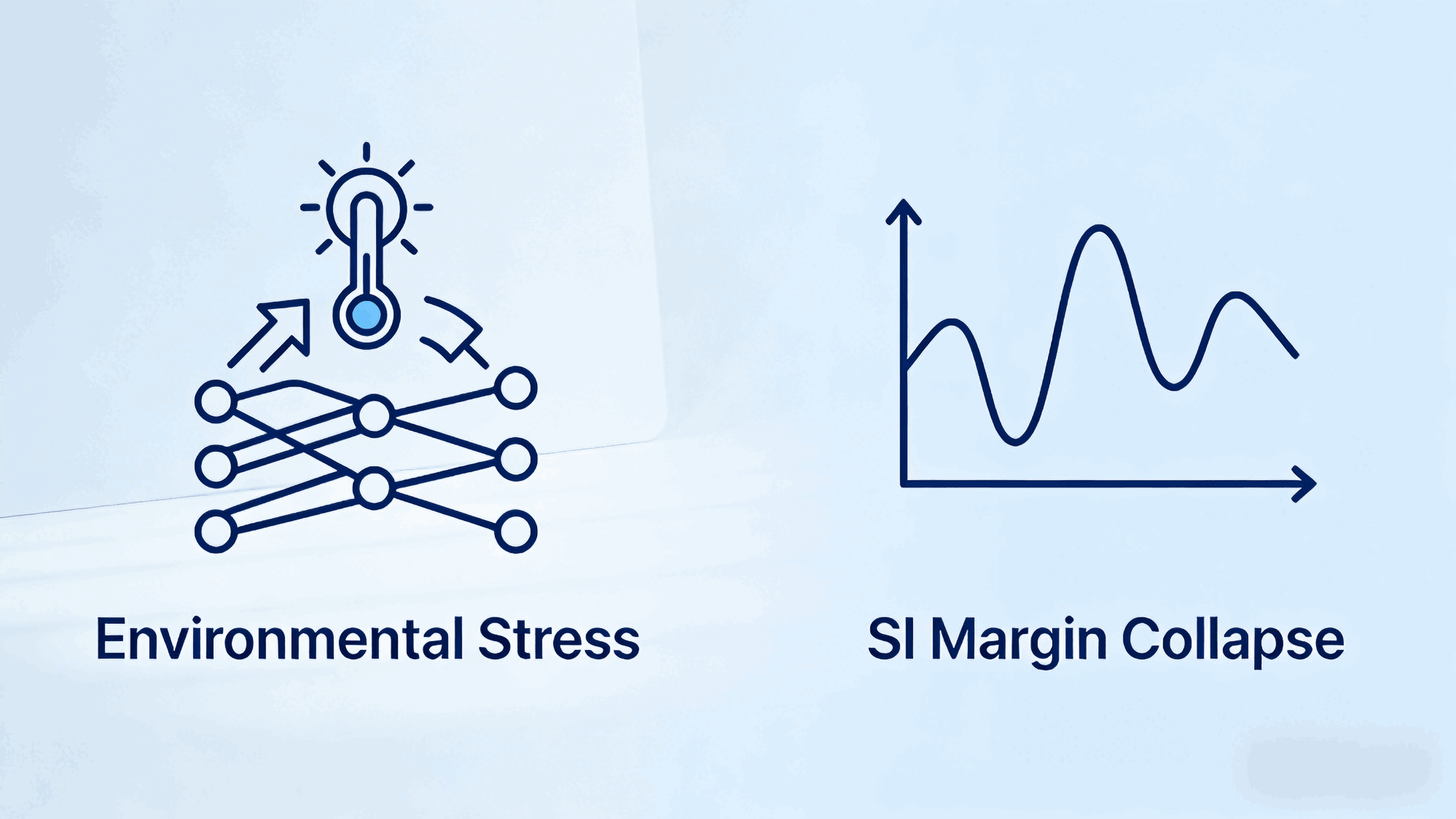
5. Environmental Stress Amplifies Signal Integrity Risk
PCIe signal margins are sensitive to:
Temperature variation
Mechanical vibration
Connector wear
Manufacturing tolerance
In dense servers or edge deployments, these factors combine.
A riser that passes in a lab may fail:
This is why SI issues often appear weeks after deployment.
6. What Proper PCIe Interconnect Validation Looks Like
High-maturity engineering teams validate risers and cables through:
Eye diagram and margin analysis
Stress testing at full link width and speed
Thermal and vibration exposure
Cross-vendor endpoint testing
Long-duration workload validation
Only interconnects that demonstrate repeatable Gen4 stability are approved.
7. Why Interconnect Issues Drive RMA and Field Escalations
From OEM and system integrator data:
PCIe instability is frequently misclassified as device failure
Unnecessary RMAs are common
Resolution cycles are long due to poor reproducibility
One unstable riser design can trigger:
Dozens of field escalations across a deployment.
8. How Experienced Teams Reduce PCIe Gen4 Risk
Experienced hardware teams:
Treat risers and cables as active signal components
Lock validated interconnect SKUs
Avoid opportunistic substitutions
Document supported link lengths and topologies
They understand:
PCIe stability is a system property — not a component checkbox.
Conclusion
PCIe Gen4 instability is rarely caused by silicon defects.
More often, it is the result of unvalidated interconnects quietly consuming signal margin.
For hardware engineers building modern server platforms, riser cards and cables must be treated with the same rigor as CPUs, memory, and storage.
In high-speed systems, what connects the components is just as important as the components themselves.