How We Maintain Outstanding Reliability While Delivering Competitive Pricing for White-Label Server Brands
In the white-label server and motherboard industry, customers often assume that lower prices come at the cost of lower quality. But at Shenzhen Angxun Technology Co., Ltd., we operate on a different philosophy:
Affordable does not mean inferior — and cost efficiency must never come at the expense of reliability.
Our “Hero Product Quality Assurance System” is engineered to deliver stable, high-performance, and cost-optimized hardware that global OEMs, system integrators, and distributors can trust. This article reveals the processes, testing standards, and quality controls that make this possible.
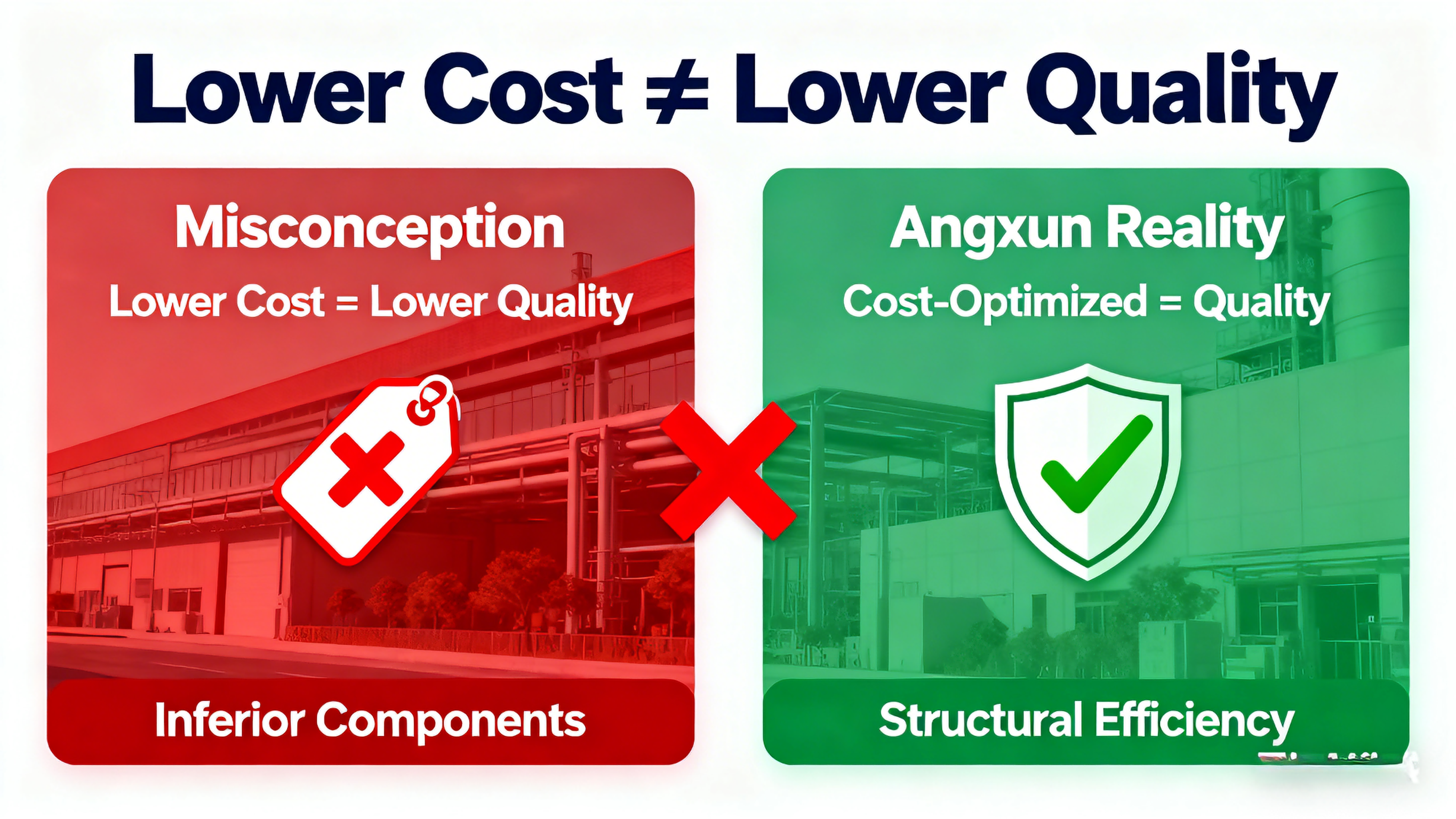
1. The Principle: Lower Cost ≠ Lower Quality
Angxun’s cost advantage does not come from compromising components, skipping testing, or reducing labor.
Instead, it comes from:
Integrated SMT + DIP + assembly lines
Multi-model component reuse
Long-term component supplier partnerships
Lean manufacturing and waste reduction
Engineering-first design philosophy
Automation to reduce human error
These measures reduce cost structurally, not at the expense of reliability.
2. Our “Hero Product” Philosophy
A “Hero Product” is a motherboard model that achieves:
High reliability across large volumes
Minimum failure rates in field deployment
Strong compatibility across CPU, RAM, GPU, NIC, SSD
Consistent performance across batches
Predictable supply for 24–36 months
These products become the backbone of our white-label customers’ portfolios, enabling stable sales and easy after-sales management.
3. Quality Assurance Begins at Engineering
Great manufacturing starts with great engineering. Before a product enters mass production, Angxun performs:
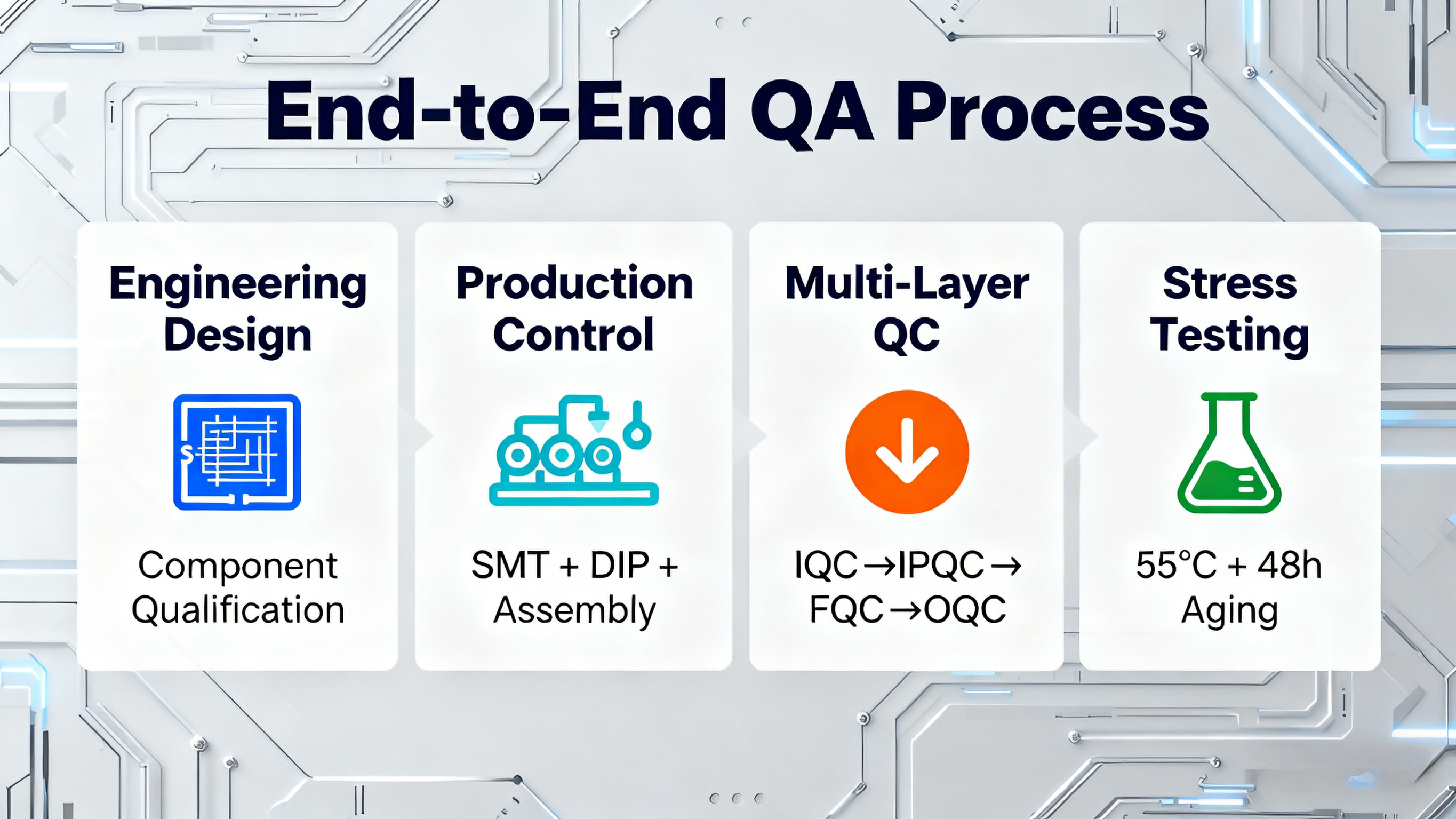
✔ Component Selection & Qualification
Every IC, capacitor, power stage, and chipset is validated for:
Stability
Temperature tolerance
Vendor consistency
Long-term availability
✔ Circuit-level Reliability Engineering
Including power integrity simulation, signal integrity analysis, and EMI validation.
✔ Pre-Validation for Configuration Compatibility
We test against:
This reduces integration risk and saves customers 200+ testing hours.
4. SMT + DIP + Assembly: Full-Process Production Control
Angxun’s manufacturing uses a vertically integrated workflow:
SMT (Surface Mount Technology) Lines
Automated stencil printing
Real-time AOI inspection
High-precision pick-and-place
Reflow soldering with temperature curve monitoring
DIP (Through-Hole) Process
Assembly + Burn-in
BIOS flashing and hardware pairing
Thermal performance validation
Board-level powering and boot cycles
This integration means no outsourcing, no hidden steps, and no uncertainty in quality.
5. Multi-Layer Quality Control: Our Standard Testing Framework
Every motherboard goes through a layered QC system that eliminates defects before shipment.
(A) IQC — Incoming Quality Control
Component appearance and packaging checks
Electrical parameter verification
Batch traceability
Vendor performance scoring
(B) IPQC — In-Process Quality Control
(C) FQC — Final Quality Control
Performed after full assembly.
Includes:
POST & boot stability tests
Memory stress tests
PCIe, SATA, M.2, USB functional checks
Thermal response testing
BIOS configuration validation
(D) OQC — Outgoing Quality Control
Before shipping to customers:
Random sampling per AQL standard
12–24 hour burn-in on selected units
Packaging integrity testing
Serial number + lot tracking
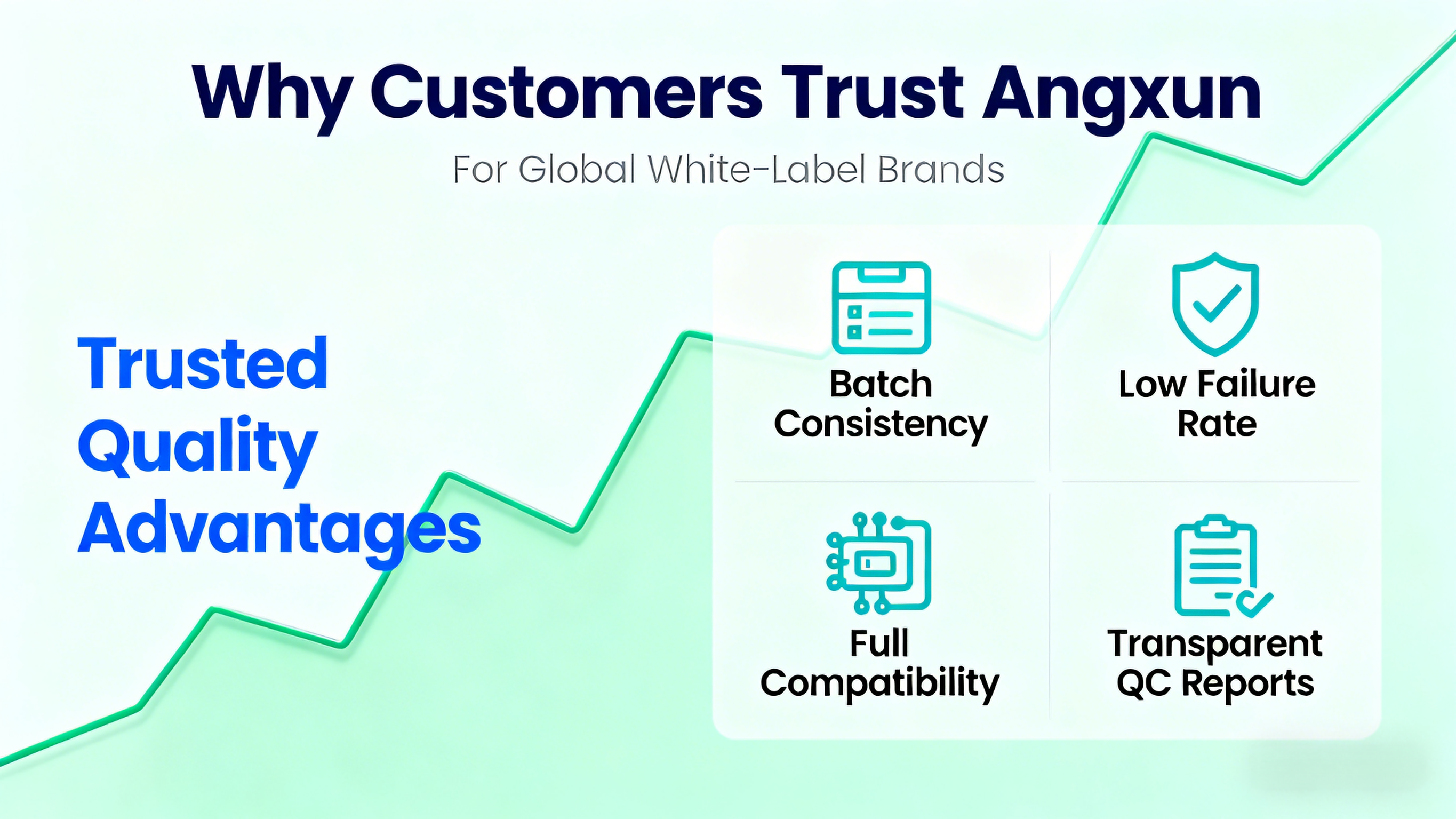
These combined steps ensure batch-level consistency that white-label customers depend on.
6. Stress Testing: The Core of Our Reliability Guarantee
To ensure long-term performance, we apply industrial-grade stress tests:
✔ High-temperature aging (up to 55°C)
✔ CPU + RAM load testing
✔ Voltage fluctuation tolerance tests
✔ Cold start / warm start cycling
✔ Full interface hot-plug tests
✔ Long-duration stability running (12–48 hours)
✔ BIOS recovery / flash stability validation
These test conditions simulate years of real-world field usage.
7. Quality Root Cause Analysis: No Guesswork Allowed
If any failure occurs inside the factory, we execute a strict RCA workflow:
5-Why root cause analysis
Component failure microscopy
Circuit-level fault duplication
Supplier escalation when needed
Preventive action for next batch
Permanent corrective action (PCA) tracking
This prevents repeated issues and supports long-term model stability.
8. Cost Control Without Cutting Corners
How do we maintain competitive pricing while keeping strict quality?
✔ Large-scale production reduces per-unit overhead
✔ Long-term component contracts stabilize pricing
✔ Lean manufacturing cuts waste—not quality
✔ In-house engineering avoids external consulting costs
✔ Process automation reduces scrap rate and rework
The result: