Why Cloud-Scale Deployments Reject “Flexible Configurations”
A Cloud Vendor Perspective
In early infrastructure planning, flexibility is often seen as a competitive advantage.
More component options.
More vendor choices.
More freedom to customize.
But at cloud scale, flexibility is rarely a strength.
It is a systemic risk.
This is why hyperscalers and cloud vendors deliberately reject flexible configurations in favor of tightly controlled, validated hardware platforms.
1. Flexibility Multiplies Variables Faster Than Systems Scale
A configuration that works well in a small deployment does not behave the same way at fleet scale.
Every “optional” component introduces:
At thousands or millions of nodes, these variables compound rapidly.
Cloud vendors do not optimize for single-node success —
they optimize for fleet-level determinism.

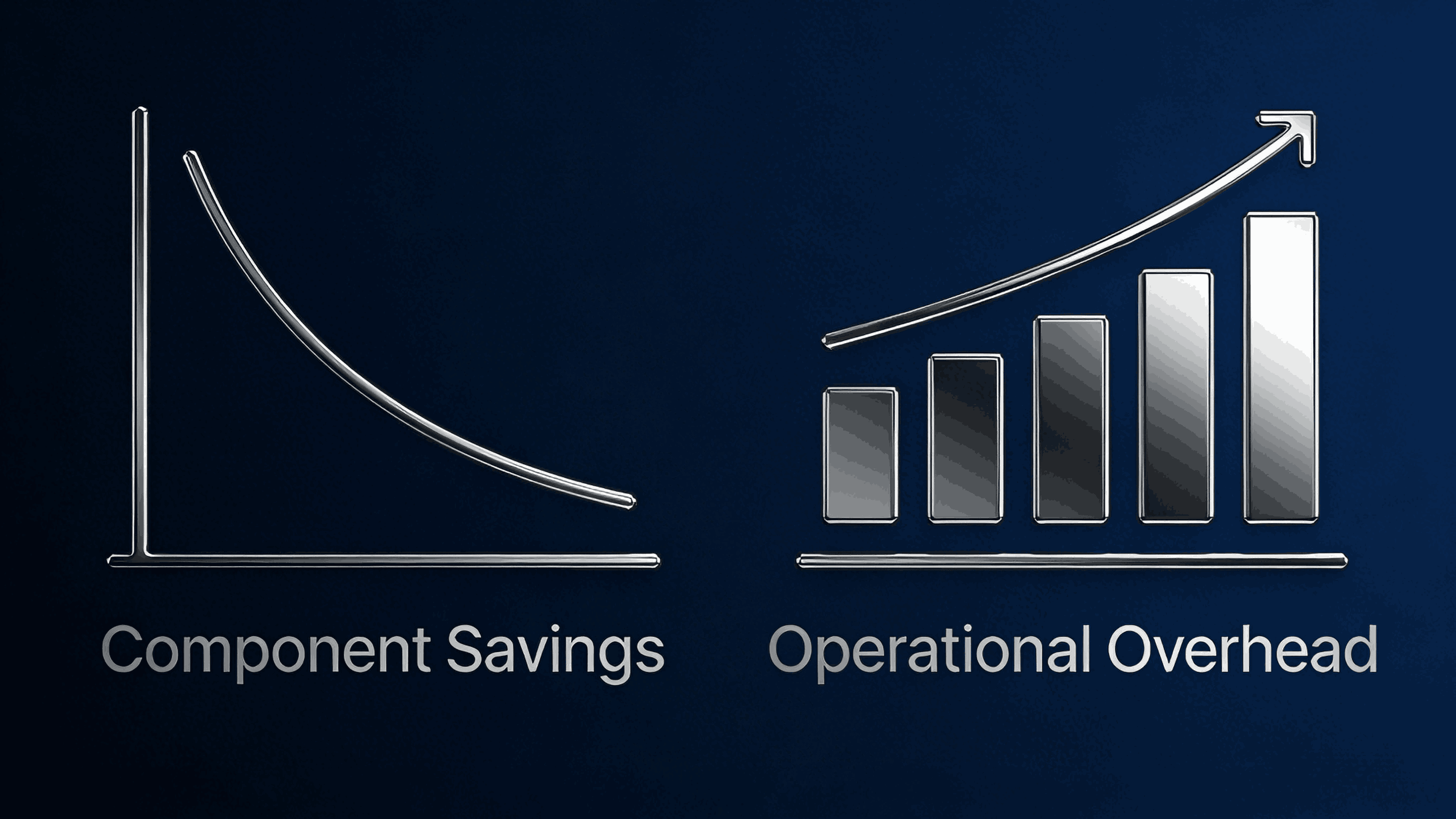
2. At Scale, Operational Cost Dominates Hardware Cost
In small deployments, BOM optimization matters.
In cloud infrastructure:
quickly exceed any component-level savings.
A flexible configuration that reduces hardware cost by 2–5% can increase operational cost by multiples of that amount.
3. Flexible Configurations Undermine Automation
Cloud platforms depend on automation for:
Provisioning
Monitoring
Remediation
Rolling upgrades
Automation assumes consistent behavior.
Flexible configurations introduce:
Exception handling
Conditional logic
Per-node special cases
Each exception weakens automation reliability and increases the risk of human intervention.
4. Debugging at Cloud Scale Requires Determinism
When incidents occur, cloud vendors must quickly answer:
Flexible configurations make these questions difficult — sometimes impossible — to answer.
Validated, deterministic builds allow:
5. Change Management Is Where Flexibility Fails Most Often
Most failures do not occur on day one.
They occur after:
OS updates
Firmware revisions
Microcode changes
Capacity expansion
With flexible configurations, each change has unpredictable impact.
Standardized builds allow cloud vendors to:
Test changes once
Deploy consistently
Roll back safely

6. Vendor Coordination Breaks Under Flexibility
Flexible configurations multiply supplier relationships:
Multiple firmware baselines
Overlapping driver ownership
Blurred support boundaries
During incidents, this leads to:
Escalation delays
Finger-pointing
Slower resolution
Cloud vendors reduce this risk by locking configurations early.
7. Predictability Is the Cloud’s Core Value Proposition
From the customer’s perspective, cloud infrastructure must:
Behave consistently
Fail predictably
Recover automatically
This requires hardware determinism.
Cloud vendors do not reject flexibility because they dislike choice —
they reject it because predictability outperforms optionality at scale.
Conclusion
At cloud scale, flexibility is not freedom.
It is fragmentation.
The most successful cloud platforms are built on:
Pre-validated component stacks
Locked firmware and driver baselines
Deterministic system behavior
This is why cloud vendors choose fewer configurations — not more.
In hyperscale infrastructure, predictability is the ultimate efficiency multiplier.