At small scale, infrastructure is forgiving.
At data center scale, variance becomes the enemy.
Many teams experience a familiar pattern:
A 10-server pilot runs flawlessly
A 50-node expansion introduces minor quirks
At 500 or 1,000 servers, “identical systems” begin behaving differently
What changed was not the architecture.
It was component variance amplified by scale.
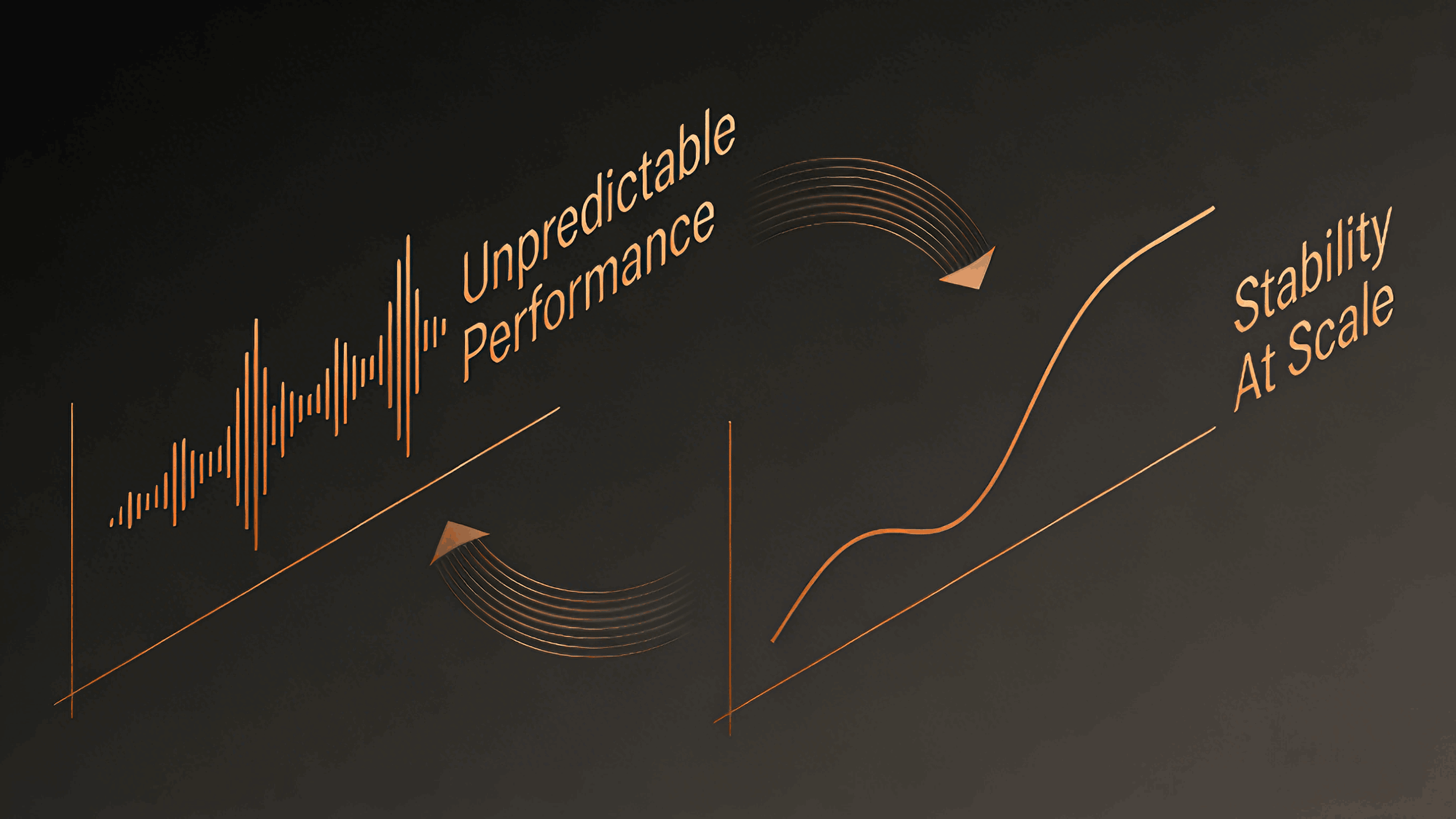
Why Small Deployments Hide Big Problems
In a lab or pilot environment:
Manual fixes are acceptable
One-off BIOS tweaks go unnoticed
Performance outliers are dismissed as noise
At 10 servers, variance is manageable.
At 1,000 servers, it becomes systemic.
Every undocumented difference compounds:
Scale does not create problems — it exposes them.

The Myth of “Same SKU, Same System”
From a purchasing perspective, everything looks consistent:
From an operational perspective, reality diverges:
Some nodes negotiate PCIe differently
Some throttle earlier under sustained load
Some exhibit intermittent I/O latency spikes
Some fail only under specific traffic patterns
The root cause is rarely a single defective part.
It is uncontrolled component diversity inside a single SKU.
Where Component Variance Hits First
1. Performance Predictability
Schedulers assume uniform capacity.
Component variance breaks that assumption.
Result:
2. Stability and Reliability
Marginal differences remain invisible — until stress accumulates.
Result:
Intermittent faults that resist reproduction
Failures that appear “random”
Escalation cycles without clear root cause

3. Validation and Deployment Velocity
Every untracked variant expands the test matrix.
Result:
4. Incident Response and RCA
Without component traceability, diagnosis turns speculative.
Result:
Why Data Centers Demand Consistency, Not Flexibility
At scale, flexibility is often mistaken for robustness.
Data center operators prioritize:
Fewer hardware permutations
Strict configuration baselines
Repeatable outcomes over optional features
Because:
Every additional component variant multiplies operational risk.
Consistency is not a limitation — it is an optimization strategy.
The Architectural Shift: From Compatibility to Consistency
Modern infrastructure teams are moving away from asking:
“Is this component compatible?”
And toward:
“Is this component behaviorally identical at scale?”
That shift requires:
Locked component versions
Pre-validated configuration sets
Explicit acceptance of limited variability
Strong collaboration between architecture, sourcing, and manufacturing
Lessons Learned from Scaling Failures
Teams that scale successfully share common practices:
They define hardware baselines as architectural artifacts
They treat component variance as a design constraint
They validate systems as ensembles, not parts
They resist silent substitutions, even when specs match
These teams debug less — and scale faster.
Final Thought
Scaling from 10 to 1,000 servers is not a linear process.
It is a transition from tolerance to discipline.
When component variance is left unmanaged, system consistency collapses under scale.
When it is controlled, scale becomes predictable.
In data centers, consistency is the true performance multiplier.