The Hidden Interaction Between Thermals, VRM Behavior, Turbo Modes, and High-Concurrency I/O
When a server throws critical errors only at night, most engineers assume coincidence.
In reality, these seemingly unpredictable failures often stem from thermal envelopes, VRM load behavior, I/O concurrency patterns, and CPU frequency scaling—interactions that only become visible under very specific operational windows.
At Shenzhen Angxun Technology Co., Ltd.—a 24-year ODM/OEM manufacturer focused on server motherboards, industrial motherboards, desktop boards, Mini PCs, and embedded platforms—our engineering team has investigated thousands of real-world field failures. The “night-only” failure is among the most common and misunderstood patterns.
This article breaks down the engineering logic behind these issues and provides a framework to diagnose and eliminate them.
1. Why Night-Time Loads Trigger Failures
Most large-scale deployments run different workloads during daytime vs nighttime:
1.1. Batch Jobs, Backups & Reindexing
At night, clusters typically run:
These generate sustained, high-concurrency storage and network I/O, unlike human-driven daytime workloads.
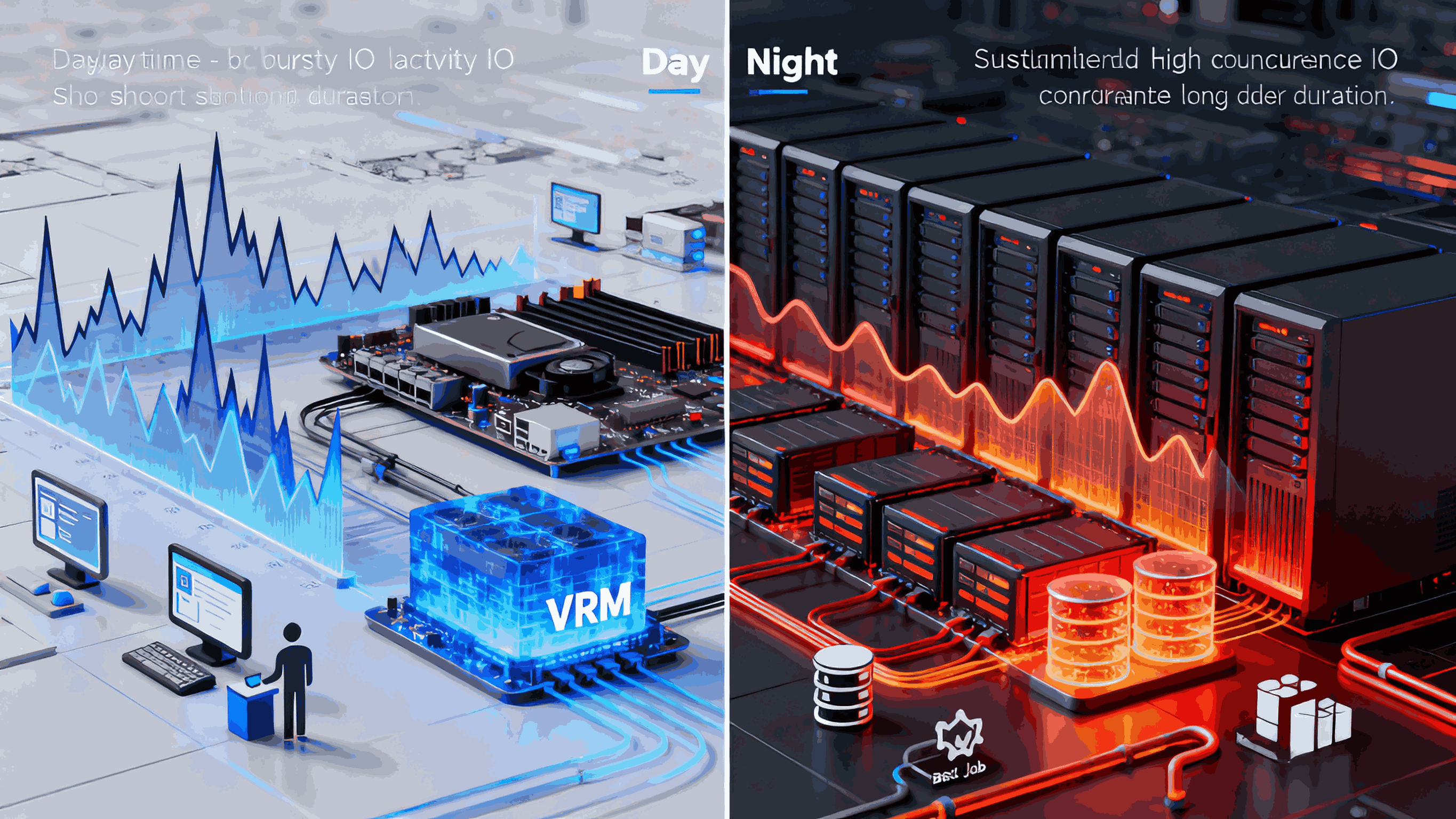
1.2. Sustained I/O → Sustained Heat
Daytime traffic spikes are bursty.
Night-time batch workloads are duration-heavy, pushing:
NVMe SSDs to peak write loads
NICs to long-duration Tx/Rx queues
CPUs to long turbo intervals
VRMs to maximum duty cycles
Many failures appear only when the entire system stays hot for hours, not seconds.
2. Thermal Saturation: The Silent Trigger of Night-Only Failures
Even a board with solid cooling may experience:
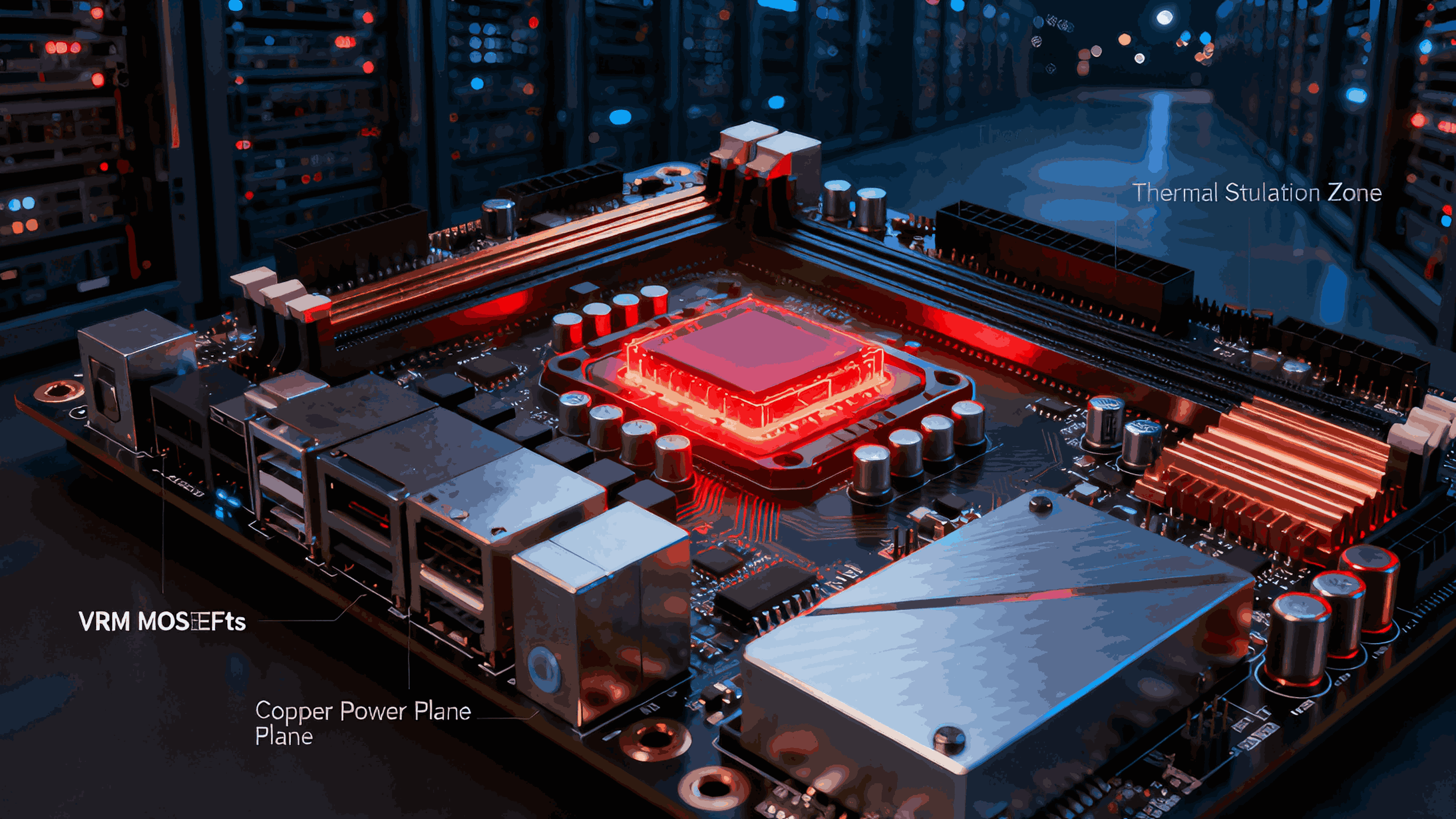
2.1. VRM Thermal Saturation
VRM MOSFETs and chokes heat slowly.
Under prolonged concurrency:
Once VRMs enter thermal saturation, CPU or NIC may experience:
Angxun advantage:
Our boards use independent CPU power stages, dual safety voltage devices, and zero-burn protection circuits to maintain voltage stability even under extended turbo workloads.
3. Turbo Behavior Causes Night-Time Instability
Servers tend to run higher turbo multipliers at night because:
This causes:
Turbo frequency + high I/O concurrency can expose marginal designs in:
PCB copper thickness
VRM cooling
Power plane distribution
SoC I/O bus timing
Angxun advantage:
We employ thick copper PCB plating, high-grade all-solid capacitors, and aluminum thermal bases to support stable turbo performance.
4. Storage & PCIe Behavior Under Night-Time I/O Flooding
4.1. NVMe Thermal Throttling
Heavy sustained writes cause NAND and controllers to:
4.2. PCIe Topology Stress
High concurrency stresses:
Switches
Retimers
Root complex allocation
IOMMU tables
Misaligned or congested topologies can cause:
4.3. RAID Rebuilds
Night-time automatic scrubs or rebuilds can cause:
5. Why Daytime Testing Never Catches These Issues
Because daytime testing is:
Short-duration
User-driven
Load-variable
Thermally intermittent
Night-time workloads are:
Long-duration
Constant
High concurrency
High thermal load
High VRM duty cycle
Engineers often test:
“Does the system crash under stress?”
They rarely test:
“Does the system crash after 3 hours of sustained, full-path I/O?”
 PREVIOUS:Zero Failures in 5 Years: How We Helped an Industrial IoT Provider Deploy 10,000+ Nodes Successfully
NEXT:How to Reduce 80% of Server Deployment Debug Time
PREVIOUS:Zero Failures in 5 Years: How We Helped an Industrial IoT Provider Deploy 10,000+ Nodes Successfully
NEXT:How to Reduce 80% of Server Deployment Debug Time